Defective Product Lawyer in Texas
Tires, airbags, tools, appliances, batteries, work equipment. When a product fails and hurts someone, the manufacturer answers for it. More than 30 years in Southwest Texas.
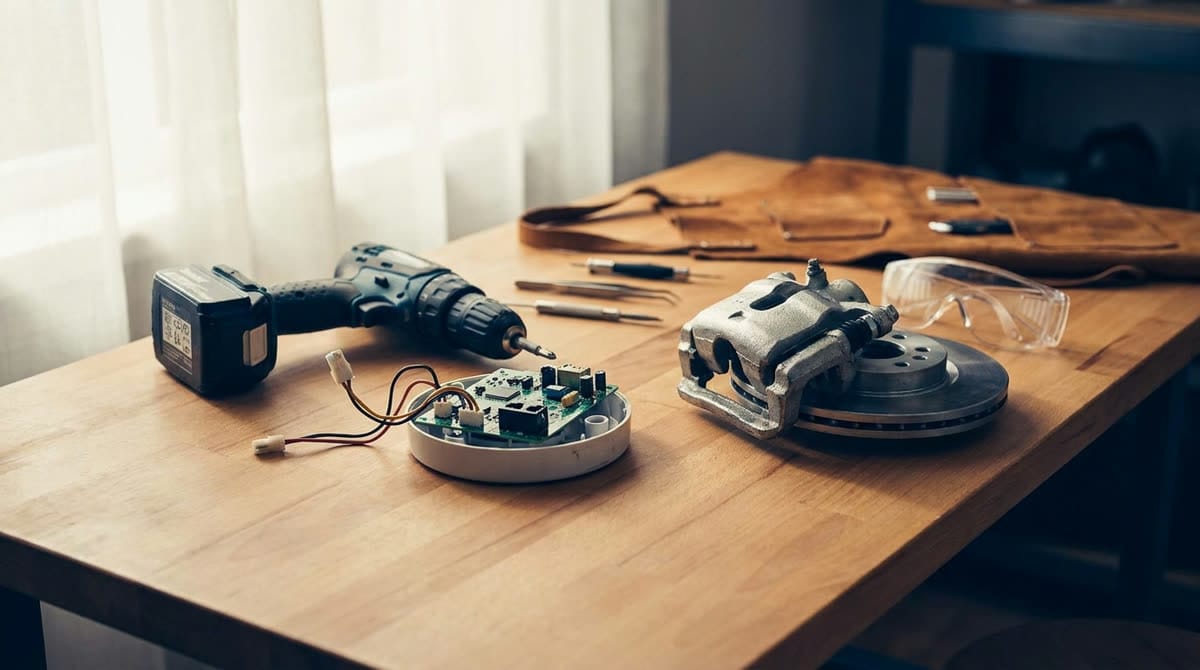
If a product injured you because it was defective — in design, in manufacturing, or for lack of an adequate warning — the manufacturer is liable in Texas even without negligence; it's enough that the product was unreasonably dangerous. What decides these cases is the product itself: don't throw it away, repair it, or return it. You have 2 years from the injury, and products also carry a limit based on the item's age.
The tire that came apart on the highway. The airbag that didn't deploy — or deployed and threw shrapnel. The saw whose guard came loose. The battery that exploded in a pocket. The heater that set the house on fire. The piece of oilfield equipment that failed under pressure.
When something like that happens, almost everyone's first reaction is to assume bad luck, or that they "did something wrong." But the products that reach your home or your job have to be reasonably safe for normal use, and when they aren't, whoever designed and built them is liable. Not for carelessness: for putting something dangerous on the market.
These cases are fought against large companies with in-house lawyers, and they're won with one thing above all: the product that failed, kept exactly as it ended up.
When is the manufacturer liable?
Texas recognizes three kinds of defect, and one is enough. In many cases the key is identifying which applies to yours:
The product came out as planned — but the plan was dangerous. A saw without an adequate guard, a vehicle prone to rollover, a crib with gaps a baby's head fits through. Proven by showing a safer, reasonable design existed.
The design was fine but that unit came out wrong: a weak weld, a batch of tires with poorly bonded rubber, a battery with a damaged cell. Your product isn't like the others of its kind, and that's what gets shown.
The product carried a risk the manufacturer knew about and didn't warn of clearly and visibly, or the instructions for safe use weren't adequate. Fine print on a box you've already thrown out doesn't always count as a warning.
For the manufacturer, Texas doesn't require proof of carelessness. It's enough that the product was defective and unreasonably dangerous, and that it injured you in normal or foreseeable use.
The store or distributor normally isn't liable just for selling, but is when it took part in the design, modified the product, gave its own warranty, or when the manufacturer can't be sued in Texas. Reviewed case by case.
What the manufacturer will say
Big companies have a script for these claims. Almost always they try to shift responsibility onto you:
The manufacturer is liable for normal use and also for foreseeable use even if not the intended one — standing on a chair, using a tool one-handed. And if the misuse was foreseeable, they had to warn against it or design around it.
That's why the product is preserved intact: so an expert can see exactly how it was. No modification, no argument. If there is one, it's evaluated for whether it actually caused the failure.
A warning has to be clear, visible and proportional to the risk. Burying it on page 40 of a manual, or in a language the user doesn't read, doesn't always meet the standard.
No recall doesn't mean no defect — many defects are discovered precisely through cases like yours. And when there is a recall it's strong evidence, but it's not a requirement either.
A refund isn't compensation for an injury. And sometimes they ask for the product back in exchange — handing it over is handing over the central proof in the case.
The evidence that decides these cases
Here there's one rule and everything else revolves around it: the product that failed is the case. What's lost can't be recovered:
Don't throw it away, don't repair it, don't return it to the store or the manufacturer, don't clean it. Bag or box it. An expert needs to see it intact to determine the defect.
The fragments, the box, the labels, the instructions. What the warning said and didn't say is proven with the original packaging.
Receipt, online order, serial number, model, lot. It pins down the exact product and whether that lot had other problems.
The same day and over time. How it failed, what it caused around it, how the injury evolves.
Product and vehicle safety agencies publish recalls and take reports. If others had the same failure, the case changes in scale.
It ties the injury to the product's failure. Without immediate care, they'll say the injury came from somewhere else.
What to do if a product injured you
In order. The first step saves more cases than any other:
- 1Keep the product as it ended up, with every piece, the packaging and the manual. Don't repair or return it.
- 2Get medical care the same day. Let the record say which product injured you and how.
- 3Photograph everything: the product, where it failed, your injury, the receipt.
- 4Write down brand, model, serial number and where you bought it.
- 5Don't accept a refund or hand over the product in exchange for anything — it's the proof.
- 6Give no recorded statement to the manufacturer or its insurer.
- 7Check for a recall of that product or similar complaints; we'll look into it.
- 8Talk to a lawyer early. Products carry an extra deadline based on the item's age, and experts need time.
What can be claimed
Every case is different and nobody serious quotes a number up front. Generally, a defective product claim can include:
- Past and future medical expenses
- Lost wages and loss of earning capacity
- Physical pain and suffering
- Mental anguish
- Physical impairment or disfigurement
- Property damage caused by the failure (a fire, a vehicle)
- In a fatal case: the family's wrongful death claim
How long do I have?
In Texas you generally have 2 years from the date of injury to file suit. But defective products carry a second limit: a maximum period counted from when the product was first sold, regardless of when it injured you. A very old product can fall outside it even if the injury is recent — which is why the purchase date should be reviewed early.
And the experts who determine the defect need months, not days. A product case that starts late reaches the deadline before it's finished being proven.
Why people call us for these cases
We identify who designed and built the product — often a different company from the brand on the box — and that's where the liability and the insurance are.
A defect is proven by an expert who examines the intact product. That's why we insist so much that it not be discarded or repaired.
No health insurance? We connect you with doctors who treat you now and get paid at the end of your case.
Nothing out of your pocket. We only get paid if we win your case.
In the Southwest Texas oilfield and construction trades, many injuries come from equipment that failed. That's a product case on top of a work case.
Your case is handled in your language, by the people handling it — and your immigration status doesn't affect your right to file.
Frequently asked questions
I already threw the product away. Do I still have a case?+
It's harder, but not always impossible: photos, the same model, recalls and other similar cases can support it. If you still have it, put it away today without touching it.
There's no recall on the product. Does that matter?+
It isn't a requirement. Many defects are discovered through individual cases before any recall. When one exists it's strong evidence, but its absence doesn't eliminate the claim.
I was hurt by equipment at work. Is it a product case or a work case?+
It can be both at once. Workers' comp or the work claim goes one way; the claim against the equipment's manufacturer is separate and carries none of those caps.
I bought the product used. Can I file?+
Generally yes, against the manufacturer, if the defect was there from the start. What changes is the deadline counted from the first sale, so it's worth reviewing early.
What does it cost to have my case reviewed?+
Nothing. The consultation is free and confidential, and we only get paid if we win. Checking whether your product has a recall or similar complaints costs nothing either.
Injured by a product that failed? Let's talk today.
Free, confidential consultation. No fee unless we win. Keep the product as it ended up — it's the first thing we'll need.
We cover Southwest Texas from Eagle Pass and we come to you. If the injury happened in one of these cities, here's what applies where you are:
Guides that may help you
This page is for informational purposes only and does not constitute legal advice. Every case is different; past results do not guarantee future outcomes. Reading this content does not create an attorney-client relationship.