Construction Accident Lawyer in Texas
Falls from height, machinery strikes, collapses, electrocution. More than 30 years representing construction workers in Eagle Pass and Southwest Texas.
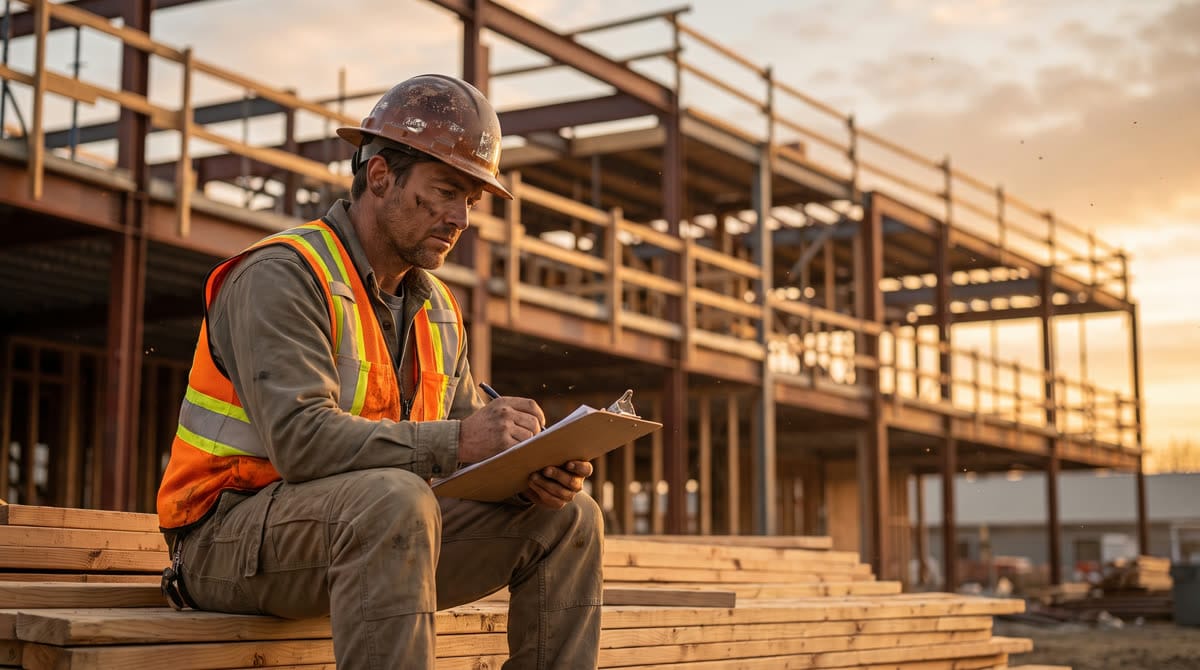
A job site almost never has just one company on it, which is why an injured worker is almost never limited to their employer's workers' comp. If another contractor built the scaffold, if the site owner didn't control safety, if the machine failed, each of them is liable on their own — with their own insurance. And if your employer carries no workers' comp (very common in Texas construction), you can sue them directly. You have 2 years; job-site evidence lasts weeks.
Construction is among the most dangerous work there is, and not by accident: heights, suspended loads, electricity, trenches, heavy machinery and pressure to deliver. When something goes wrong, the injury is rarely minor.
The first thing you'll hear is "workers' comp covers that." Sometimes true — but almost always only part of it. A job site has many companies at once: the general contractor, the subcontractors for each trade, the project owner, the company that rented the crane. Each has its own safety duty and its own insurer.
Finding the one who actually caused your injury is what turns a comp check into a full case. Here's how it works.
Who is liable for a job-site accident?
It depends on who controlled what failed. These are the most common routes, and in many cases several apply at once:
Whoever built the scaffold, left the trench unshored, ran the crane, left a live wire. If it isn't your employer, you have a direct claim against them — outside the workers' comp system and without its caps.
Whoever controls the site usually has a duty to coordinate safety across trades. If they knew of a hazard and didn't correct it, or had no real safety plan, they're liable.
Texas is the only state where that insurance is optional, and in construction it's very common not to have it. A non-subscriber employer can be sued directly and loses three key defenses: they can't argue you were at fault, that you knew the risk, or that a coworker caused it.
A harness that snaps, a saw without a guard, a lift that fails, a ladder that gives. If the equipment was defective or lacked an adequate warning, the manufacturer is liable even if you used it correctly.
Whoever entered the restricted zone and hit you is liable as in any crash — and sometimes so is whoever was supposed to mark the zone.
What they'll tell you so you don't file
In construction the pressure doesn't come only from the insurer; it comes from the foreman, the contractor and sometimes coworkers. These are the usual lines:
Comp covers your employer. Everyone else on the site — contractors, owner, manufacturer — is outside that protection and can be claimed against separately. It's the question almost nobody asks and the one that changes the case most.
No report means no record, and no record means the insurer will later say it didn't happen at work. Report in writing and ask for a copy, even if the foreman is annoyed.
Texas uses comparative negligence: you recover as long as your share doesn't exceed 50%. And if protective equipment wasn't provided, required or trained on, that failure belongs to whoever controlled the site.
That is retaliation and it's illegal. Your immigration status doesn't affect your right to recover for an injury, and what you tell your lawyer is protected. Keep the message or the name of whoever said it.
Many non-subscriber companies offer a private plan in exchange for a waiver of your right to sue or an arbitration agreement. Sign nothing a lawyer hasn't reviewed.
The evidence that decides these cases
A job site changes every day. What proves fault today is demolished, covered or repaired next week:
The scaffold as it stood, the unshored trench, the missing guardrail, the cable, the machine. Before they "fix it" — because they will.
Name of the general contractor, your employer, the sub that controlled what failed, the project owner. The site signage and the building permits say so.
If OSHA inspected, its findings are strong evidence. So is the company's internal report — request it in writing.
Names and personal phone numbers, not work ones. Construction crews change sites every month and can't be found afterward.
Were you trained for that task? Were you given the gear? If there's no record, that counts too — in your favor.
Same-day care ties the injury to the accident. Toughing it out for a week "so you don't miss work" is the first thing used against you.
What to do after a job-site accident
In order. Several of these can be done by a coworker or family member if you're hurt:
- 1Get medical care the same day, even if the foreman says it's nothing. Back and head injuries don't always show at first.
- 2Report the accident in writing to your employer and ask for a copy. If they won't give you one, text yourself the date, time and what happened.
- 3Photograph the scene and the equipment before it's moved or repaired.
- 4Write down every company that was on the site, not just yours.
- 5Get phone numbers of coworkers who saw what happened.
- 6Sign nothing — from the employer, an insurer, or an "injury plan" — without a lawyer reviewing it.
- 7Find out whether your employer carries workers' comp. It completely changes your options, and we check it at no cost.
- 8Talk to a lawyer within days. The site keeps moving and the evidence goes with it.
What can be claimed
Against a liable third party, or a non-subscriber employer, the claim isn't limited to the system's schedules. Every case is different and nobody serious quotes a number up front, but generally it can include:
- Past and future medical expenses, including surgery and rehabilitation
- Wages lost while you couldn't work
- Loss of earning capacity, if you can no longer do the same trade
- Physical pain and suffering
- Mental anguish
- Physical impairment or disfigurement
How long do I have?
In Texas you generally have 2 years from the date of the accident to file an injury lawsuit. Deadlines to report inside the workers' comp system are much shorter — which is why reporting immediately matters even if the case later goes another route.
And job-site evidence doesn't wait two years or two months: the site transforms weekly, machinery moves to the next project, crews scatter. The real window to act well is measured in days.
Why construction workers call us
Our first question isn't what comp pays — it's who else was on the site. That's where the case is.
No health insurance? We connect you with doctors who treat you now and get paid at the end of your case.
In Texas any worker injured by another's negligence can file. What you tell us is protected, and a threat to report you is retaliation.
Nothing out of your pocket. We only get paid if we win your case.
More than 30 years with construction, oilfield and infrastructure workers across Southwest Texas.
Your case is handled in your language, by the people actually handling it.
Frequently asked questions
I'm already receiving workers' comp. Can I claim anything else?+
Yes, if someone other than your employer caused or contributed to the accident — another contractor, the site owner, the equipment manufacturer. That claim is separate and not limited by comp.
My employer has no workers' comp. Does that hurt me?+
The opposite. In Texas you can sue them directly, and the law strips three defenses they'd normally use against you. You still have to prove their negligence, but they come to the table far more exposed.
The foreman says it was my fault for not wearing the harness.+
Even if you're assigned some fault, in Texas you recover as long as it doesn't exceed 50%. And if the harness wasn't provided or required, that failure belongs to whoever controlled site safety.
I don't have papers. Can I file?+
Yes. Your status doesn't affect your right to compensation for an injury, and what you tell your lawyer is protected. If you're threatened with immigration for filing, that's illegal retaliation — keep the evidence.
I was paid in cash with no contract. Do I still have a case?+
Yes. How you were paid doesn't change who was negligent or your right to claim against them. It helps to document that you worked there: messages, photos, coworkers.
What does it cost to have my case reviewed?+
Nothing. The consultation is free and confidential, and we only get paid if we win. Checking whether your employer carries comp and who else was on the site costs nothing either.
Hurt on a job site? Let's talk today.
Free, confidential consultation. No fee unless we win. The site changes every day — the sooner we talk, the more evidence we can preserve.
We cover Southwest Texas job sites from Eagle Pass and we come to you. If your accident happened in one of these cities, here's what applies where you are:
Guides that may help you
This page is for informational purposes only and does not constitute legal advice. Every case is different; past results do not guarantee future outcomes. Reading this content does not create an attorney-client relationship.